

The NCCS is home to multiple complex computing systems that provide high-performance computing, managed virtual environments, data services, remote visualization, and storage. This section includes system descriptions, specifications, and links to specialized support and instructionals.
Explore Our Systems
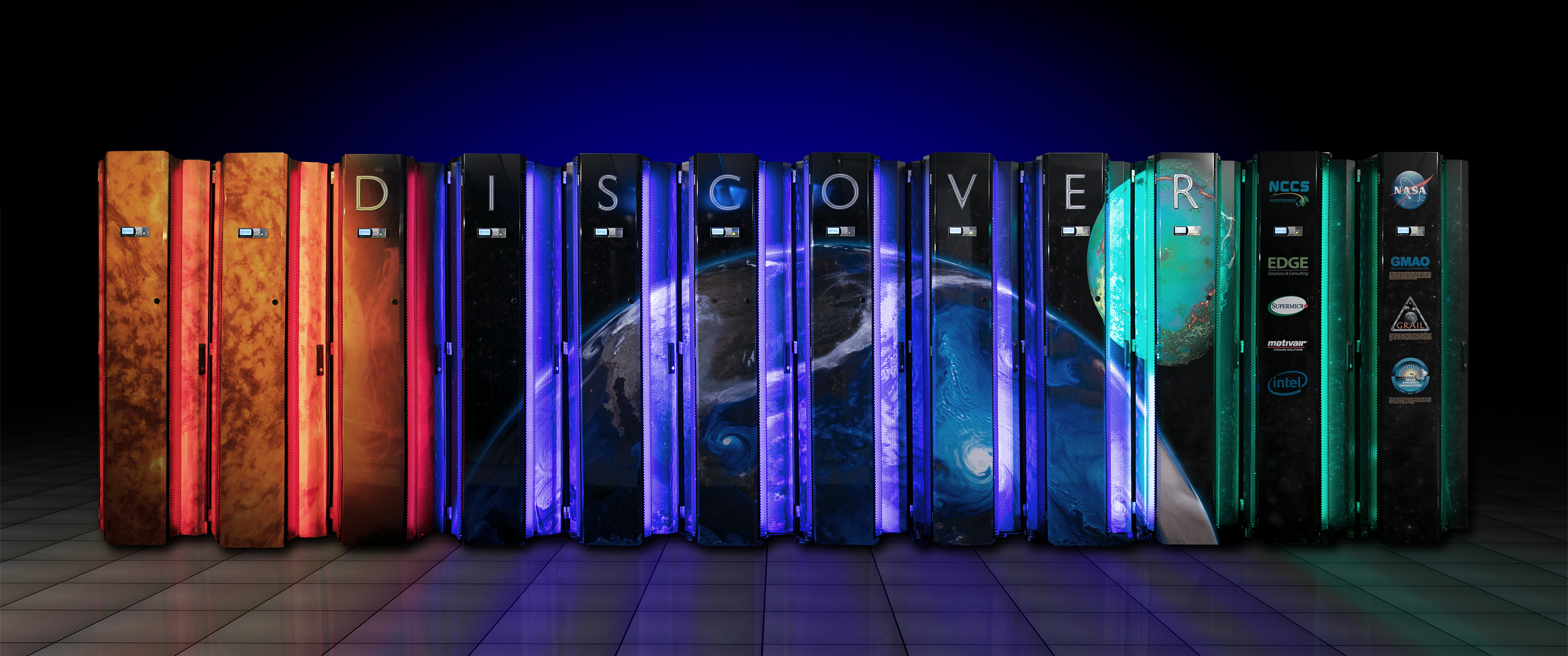
Discover Supercomputer
The centerpiece of the NCCS is 213,288 core Discover” supercomputing cluster, an assembly of Linux scalable units capable of 8.28 petaflops, or 8,280 trillion floating-point operations per second.
Discover is particularly suited for large, complex, communications-intensive problems employing large matrices and science applications, which benefit from its ecosystem of software ecosystem.
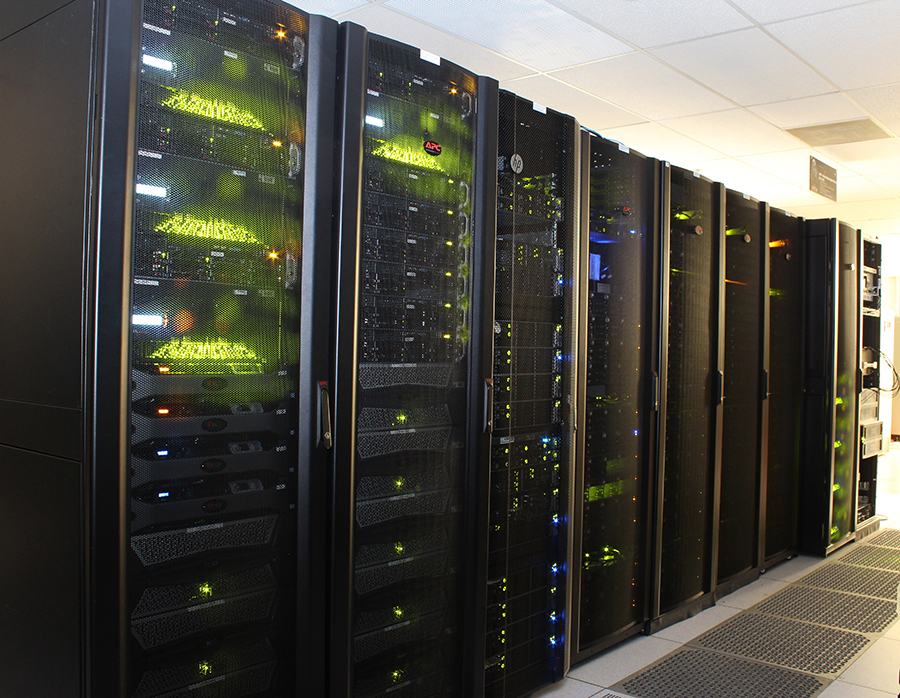
Explore/ADAPT Science Cloud
Explore combines high-performance computing and virtualization technologies to create an on-site private cloud. This managed virtual machine (VM) environment is specifically designed for large-scale data analytics.
The system allows researchers to bring their applications to the data and define the environment in which those applications run. The science results can then be stored for future analysis or shared with other users.
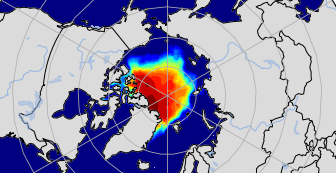
Remote Visualization
The NCCS provides JupyterHub access to support data visualization of science results generated on our systems.
This web based interface is intuitive to use and does not need X11 forwarding or downloading data to your local system.
.png)
DataPortal
The DataPortal empowers NCCS users to share data produced on NCCS computing systems with the scientific community and the public. User datasets include weather forecasts, climate projections and reanalyses, and land information systems.
This system hosts a variety of data services, ranging from HTTPS to geographic information systems. In many cases, this virtual environment can be expanded to meet the user’s needs.
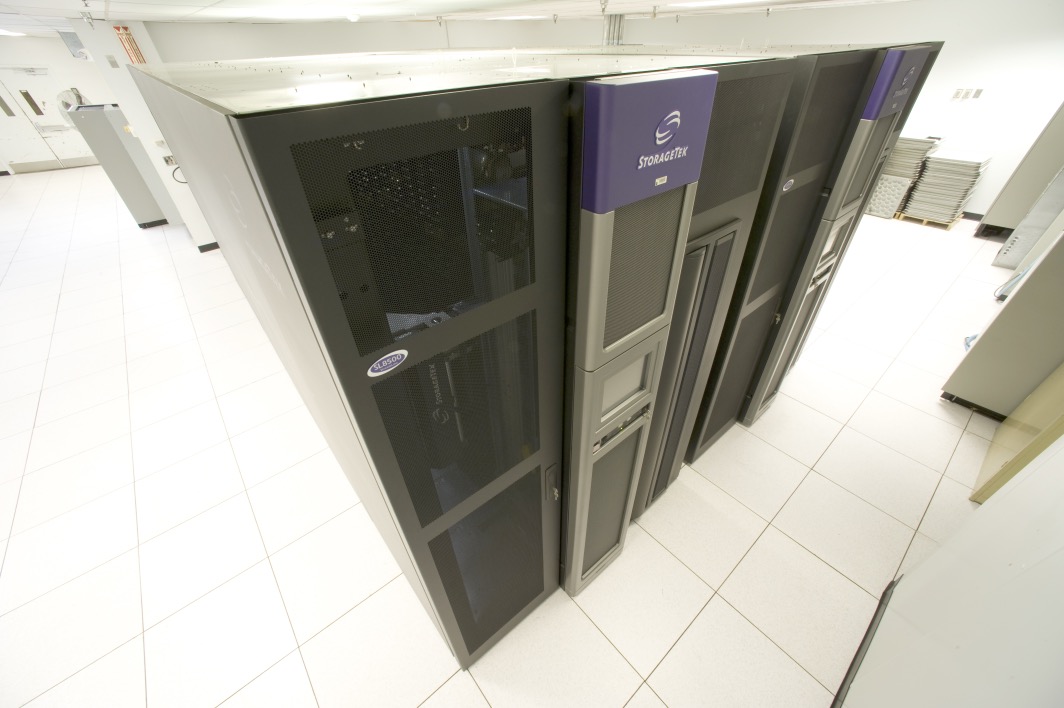
Storage Systems
The NCCS has deployed a Centralized Storage System (CSS) to share curated datasets, reduce duplication, and free up storage for new data products.
Historically, the NCCS has provided longer-term storage of data products on tape. Changes to this system are in progress, however, so users are encouraged to develop a data management plan.
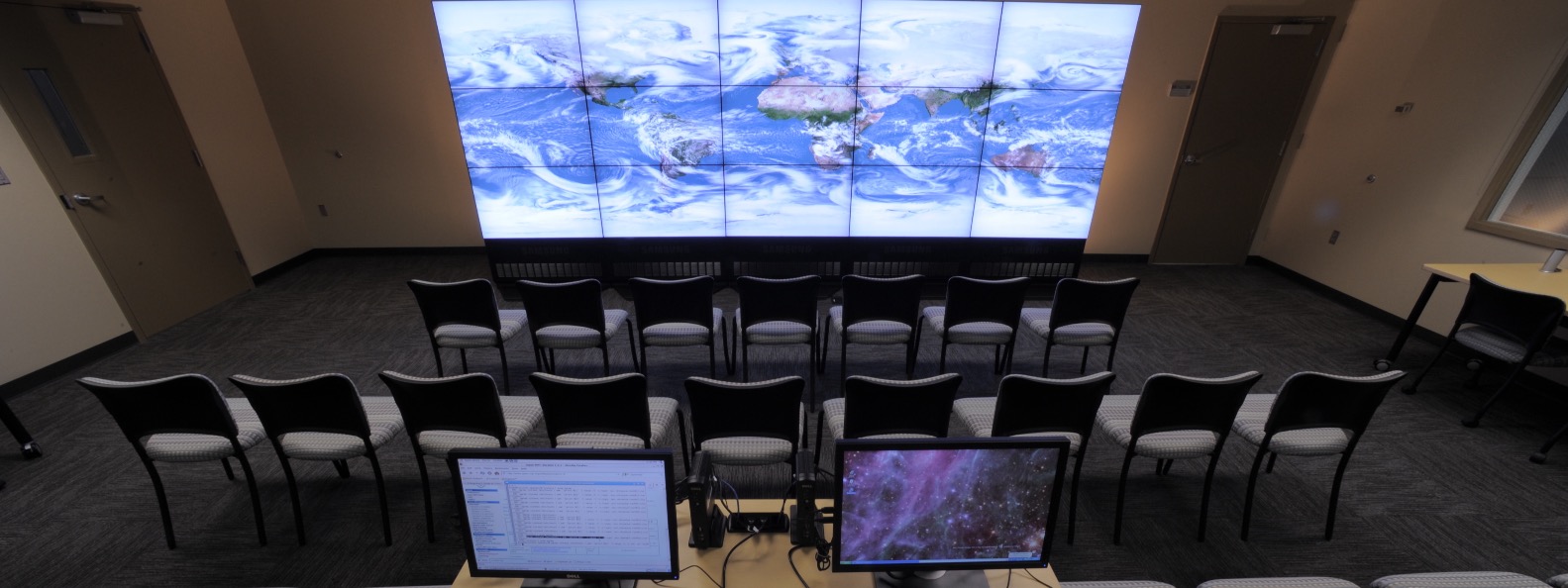
Hyperwall
The hyperwall is a flexible environment for displaying high-definition movies of simulation results, data visualizations, animations, and other imagery. The system showcases data and simulation results at a much higher resolution than traditional high-definition resolution, up to 9600 x 3240 pixels per inch.
The NCCS hyperwall also offers a scalable amplified group environment for data interaction and collaboration.
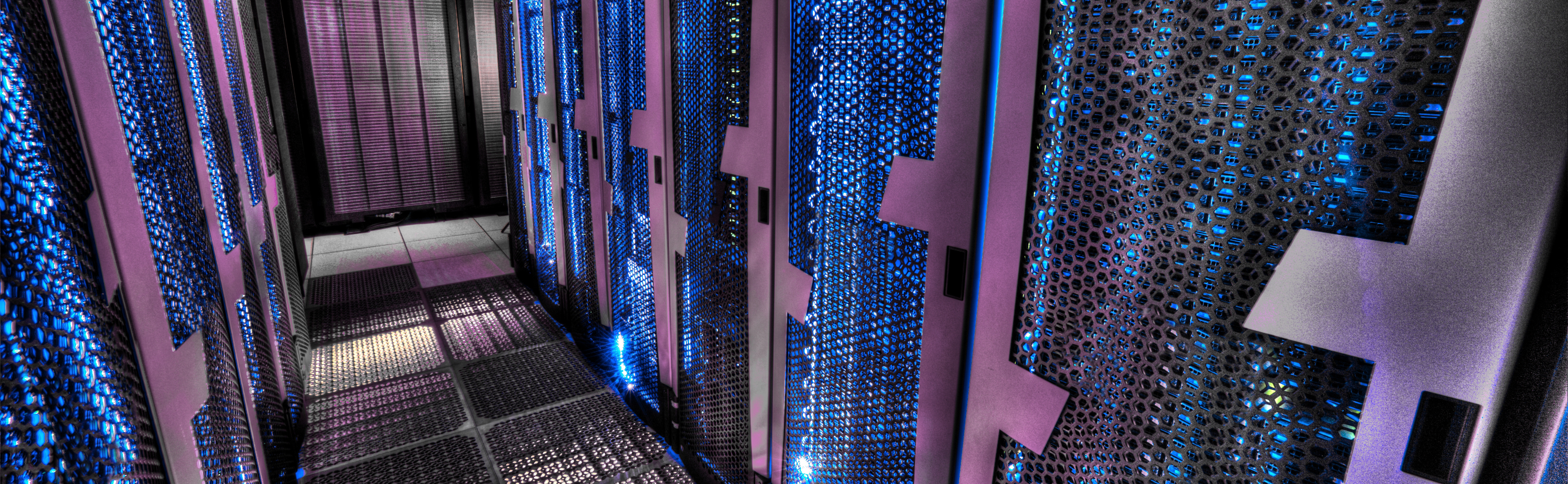
Science Managed Cloud Environment (SMCE)
The Science Managed Cloud Environment (SMCE) is a managed Amazon Web Service (AWS) based infrastructure for NASA funded projects that can leverage cloud computing capabilities. While the SMCE was started to meet the needs of AIST projects, any NASA project that can leverage AWS public-cloud capabilities can get access to the SMCE.
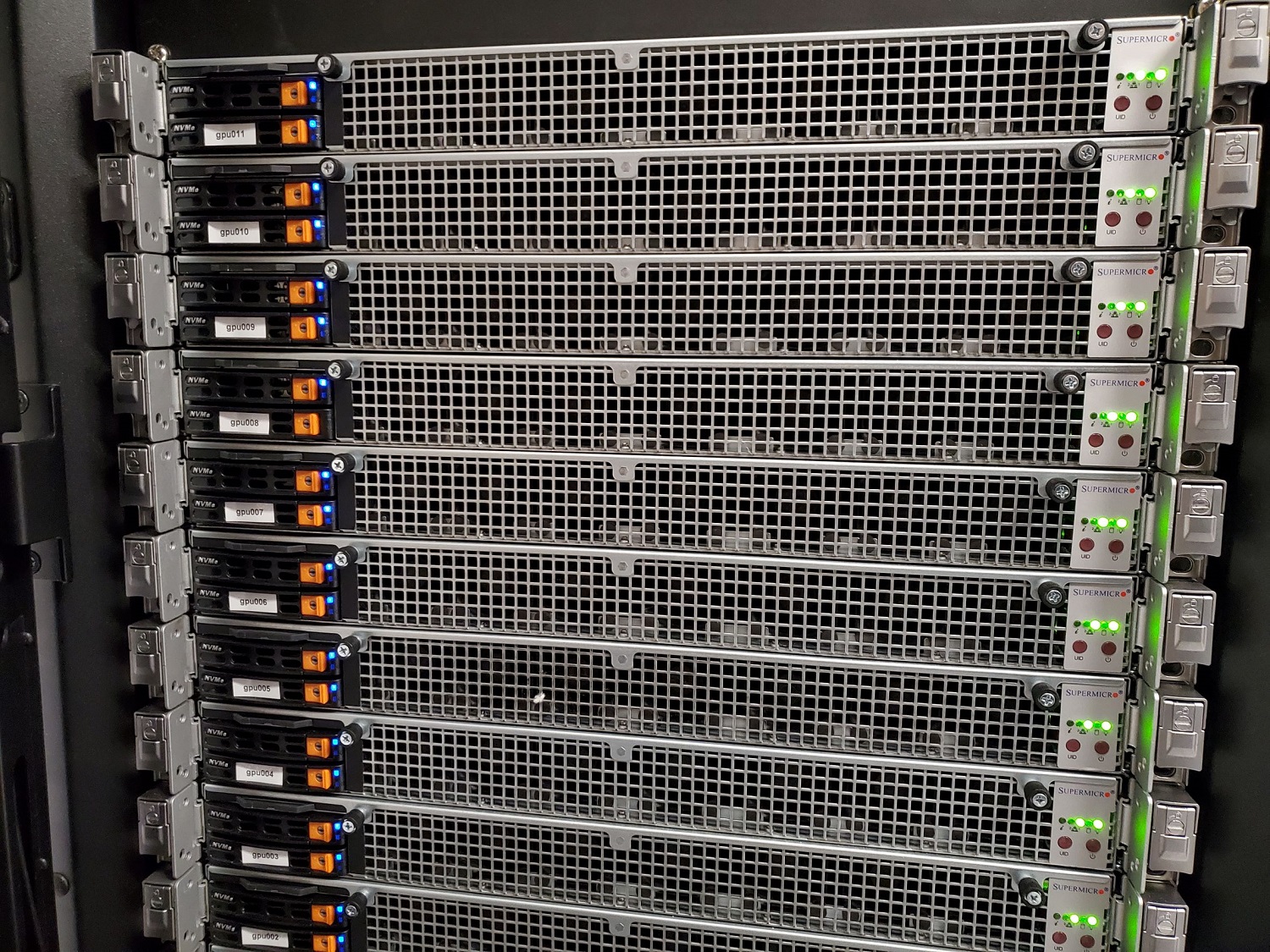
Prism
Prism is a GPU cluster, with 88 NVIDIA v100 GPUs, 8 Nvidia A100 GPUs and 62 H100 GPUs, designed to facilitate research using AI/ML methodologies.
Prism has access to many petabytes of curated NASA data products in the climate model, Earth observation, heliophysics, and astronomical fields to generate training datasets to support AI/ML research.

See how we can provide innovative solutions to complex computing requirements like yours.
Contact Us
Our User Services Group is here to answer your questions and walk you through the account set-up process. We also welcome your feedback.
Phone Number
Operating Hours
Monday – Friday
9:00am – 5:00 pm EST
(Excluding US Federal Holidays)
Mailing Address
NASA Goddard Space Flight Center
NCCS User Services Mailstop 606.2
Greenbelt, MD 20771